
How to Get Quality Backlinks That Actually Promote Your Site
Everyone wants backlinks; rankings only reward the good ones. This guide explains the link types that matter, the criteria a donor site must pass, four strategies that consistently produce quality links, and how many you actually need per month.
Backlinks remain one of the strongest ranking signals search engines use — and one of the easiest to waste money on. The difference between a link that lifts a site and one that does nothing (or worse) comes down to quality: where it sits, what surrounds it, and whether a real audience stands behind it. This guide is the full playbook: types, criteria, strategies and pacing.
Link building — deliberately encouraging other sites to link to yours — raises predictable questions. Which links actually help? How do you tell a good donor from a risky one? Where do powerful links come from, can you get them yourself, and in what proportions should keyword anchors and plain brand mentions appear? And how do you grow steadily without harming the site? Each question gets a practical answer below.
What to know before you start
Search engines read a link as a vote. Votes from relevant, trusted, trafficked pages count heavily; votes from link farms, hacked sites and mass directories are discounted or treated as manipulation. Google’s guidelines draw the line at intent: links earned because the content deserves citation are the game; schemes built to deceive the algorithm are the risk. Everything below stays on the right side of that line.
Two shifts explain the modern approach. First, sheer quantity stopped working: search engines now weigh who is voting far more than how many votes exist. Second, good content alone does not remove the need for links — when well-written pages compete for the same queries, citation by trusted sites becomes the tie-breaker, and the number of distinct referring domains is consistently among the strongest correlates of high rankings.
Before you build anything, put your own house in order. Links cannot fix slow, confusing pages, duplicate content, broken navigation or a missing sitemap and robots file. Audit the technical basics, make the pages you promote genuinely worth visiting, and only then invest in links pointing at them — link building amplifies what is already there.
Why quality links promote a site
A quality backlink does three jobs at once. It passes ranking authority to your page. It sends referral visitors who arrive pre-sold by the context they found you in. And it compounds: pages with strong links rank for more keywords, which earns more links, which is why the leaders in any niche seem to pull away. Low-quality links do none of these — they just inflate a spreadsheet.
In checklist form, a good link programme should deliver greater trust, faster growth, higher positions, referral visitors, and brand awareness. If a tactic cannot contribute to at least two of those, it is not worth its price — however impressive the promised link count sounds.
The basic types of backlinks
Knowing the vocabulary keeps you from buying the wrong product. Two offers that both promise “a backlink” can differ completely in durability, risk and value. Work through the main distinctions — how long a link lasts, how it is obtained, what its anchor says, and whether it passes equity.
Perpetual links versus rental links
A perpetual (or eternal) link is paid for once and placed inside content — usually an article — intending that it stays indefinitely. “Indefinitely” is conditional: a donor can close, change owners or prune old posts. Even so, a perpetual link inside a relevant article looks natural, ages with the page around it, and forms the backbone of a healthy profile. It costs more up front, because you are buying permanence. A rental link, by contrast, is paid for monthly and disappears when payments stop. Rentals are often inserted into sidebars, footers or unrelated existing pages, because they were never written for a reader. They are cheap, but their patterns are easy to recognise, their relevance is weak, and any benefit vanishes with the subscription. Treat rentals as a legacy tactic and put the budget into permanent, in-content placements instead.
Automatically purchased links — and their risks
Automated buying promises link building without your involvement: you feed target queries into a system, it matches pages from a database, places links, and replaces any that disappear. The time saving is real; so is the loss of control. You do not choose the sites, cannot judge whether an article fits your topic, and may not notice a low-trust donor until the damage shows in your profile. Results are unpredictable — occasionally acceptable, often worthless, sometimes harmful. Any method where you cannot inspect the donor before the link goes live deserves deep suspicion.
Crowd links: forums, Q&A and comments
Crowd links are mentions placed where real people discuss things — thematic forums, question-and-answer sites, blog comments and community threads. At their best they are exactly what they should look like: a genuine recommendation, where someone reviewing a product or answering a question drops a plain, usually non-anchor link and interested readers follow it. Done properly this is slow work: find communities that fit the topic, participate credibly enough to be allowed to post links, and write contributions that help readers rather than reading as disguised advertising. That effort is the point — crowd links diversify a profile, support steady organic-looking growth and send real referral visitors, with little risk when they are honest and moderate in number.
SEO links: when a link exists only for search engines
“SEO link” has become shorthand for a link created purely to manipulate rankings rather than to help a reader — the kind search engines try to discount or penalise. The warning signs recur: placements with no topical connection, such as a technology offer on a cosmetics page; links forced into footers and side menus; anchors stuffed with commercial phrases; and links placed on donors with no trust of their own. One such link rarely sinks a site, but a profile dominated by them tells a clear story — and many cheap packages are, in substance, bundles of SEO links under a friendlier name.
Anchor links versus non-anchor links — and the right ratio
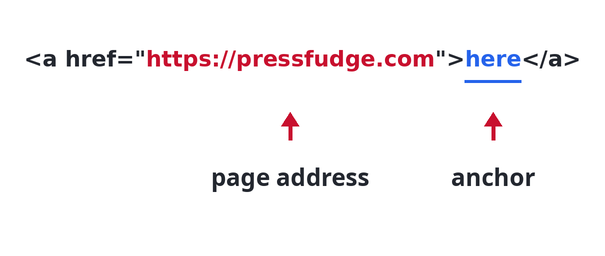
An anchor link carries clickable text — the words between the opening and closing link tags — and that text tells search engines what the target page is about. Anchors can repeat a target phrase exactly, or dilute it inside a longer, more natural phrase. Used well, they help the right page rank for the right query; used aggressively, with the same commercial phrase everywhere, they become a clear footprint of manipulation. Non-anchor links avoid keyword text altogether: a bare URL (yoursite.com or the full page address), a brand name, an image, or generic words such as “here”, “this guide” or “read more”. A natural profile is dominated by these safer forms. As a rule of thumb, aim for roughly one fifth anchor links carrying meaningful phrases and four fifths non-anchor — branded, URL and generic — because that resembles how people link when nobody is optimising. Within that fifth, keep exact commercial phrases such as “buy laptops cheap” or “order catering in Leeds” to a small minority, and only from strong, trusted donors; commercial language reads unnaturally in editorial text. Vary everything — branded variants, partial phrases and long descriptive anchors always outperform one repeated keyword.
- Branded anchors — your company or site name, sometimes with a short descriptor
- URL anchors — the naked address, with or without the protocol or www prefix
- Generic anchors — “here”, “this article”, “their website”, “learn more” and similar filler people naturally click
- Descriptive anchors — a longer phrase describing the destination, containing a keyword occasionally rather than by formula
Dofollow versus nofollow links
Every link either passes ranking equity or is marked not to. A dofollow link — the default, with no special attribute — invites search engines to follow it and credit the target as endorsed. A nofollow link carries an attribute telling search engines not to treat it as a vote; major reference sites mark all external links this way, which is why their value is endlessly debated. Nofollow is not worthless: such links from genuine coverage still deliver referral traffic, exposure and discovery, and may count as hints. A profile with only dofollow links also looks engineered — real sites naturally accumulate a mixture, because social platforms, directories and many publications nofollow by default. Chase quality and relevance first, and verify what you received.
Which links are worth getting?
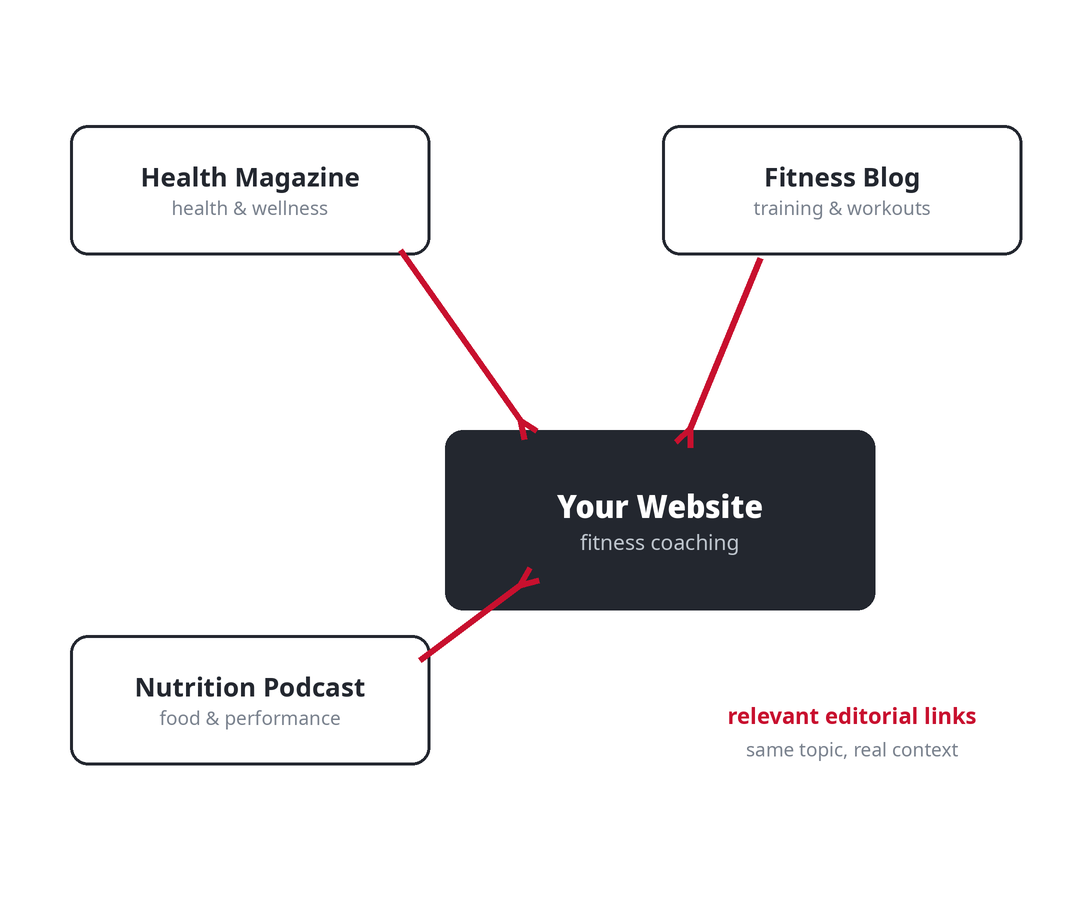
Prioritise editorial links inside relevant articles on sites with real search traffic — news placements, niche publications, resource pages that rank. One such link is worth more than a hundred profile or directory entries. The closer the linking page’s topic to yours, the more the vote counts; a finance story linking your fintech launch is gold, the same link from a recipe blog is noise.
Hold every acquisition to three tests. Is it safe — from a site and method you would happily show a search engine? Is it effective — likely to move rankings, traffic or awareness, not just add a row to a report? And is it purposeful — aimed at a defined goal such as promoting a specific page or building the brand? Only links from trusted, relevant resources reliably pass all three. Criteria vary by niche — a local trades business and a national software company should not chase identical donors — but the framework travels well.
Quality criteria for a donor site
Run every candidate through this checklist before it costs you anything. No single metric decides; look for a consistent picture across all six criteria, and walk away when several fail at once.
Topic similarity
The donor and your site should inhabit the same subject world. Search engines assess relevance contextually, so a link from a publication your audience already reads carries weight an unrelated placement cannot match. If in-topic sites are exhausted, widen carefully to adjacent territory with a bridging angle: a cookware brand can legitimately appear on recipe sites in an article about cooking with its pans, and a fitness app can fit a workplace-wellbeing publication. What you cannot do is fake the connection. Large general media are the exception: news portals publish across topics by design, so a story genuinely about your subject is relevant even though the domain is broad.
The quantity and quality of the donor’s own link mass
A link is only as strong as the site giving it, and that shows in the donor’s own profile. Look at how many distinct domains link to the donor, whether that number grew steadily or in suspicious jumps, and whether those sites are credible. Then check the other side: a page with dozens of outbound links shares its value thinly, and a site linking to casinos and unrelated shops is telling you what neighbourhood it keeps. Check referring domains, anchor mix and recent gains and losses in a backlink tool, rather than accepting a single authority score.
Where the link will be placed
Placement decides whether humans — and algorithms — treat a link as an endorsement. The strongest position is inside the main body of a relevant article, surrounded by text explaining why the destination deserves a click; better still is a promoted placement, because an article surfaced on the homepage or a busy section brings readers as well as equity. Links buried in footers, sidebars or dedicated “partners” pages are worth a fraction as much and match the patterns of rented and scheme links. Before paying, agree the placement in writing: in-content, in a topically matched article, not on a page created purely to hold paid links.
Website traffic
A donor with no audience is a billboard in a desert. Look for a meaningful, sustained flow of visitors — as a working floor, hundreds of genuine visits a day rather than a handful — and, more revealingly, pages that rank for real queries. Traffic proves the site is indexed, trusted enough to rank, and read by someone. Verify it in an independent tool rather than trusting a seller’s screenshot, which can show a brief spike or a busier month. A stable or gently rising trend beats a collapsing one every time.
Traffic sources: why the organic share matters
Where traffic comes from matters almost as much as how much there is. A healthy donor is fed mainly by organic search and direct visits — evidence that search engines trust it and readers return to it. If most traffic arrives through paid campaigns or pop-under networks, the apparent popularity says little about its standing with search engines, and your link inherits that weakness. Heavy social traffic is more nuanced: it shows engagement, but if social dwarfs search, the site may be a good advertising channel rather than a good link donor — use it for promotion, not rankings, and price it accordingly.
Social signals and signs of life
Finally, judge how the audience behaves. Do readers comment, share articles and mention the site elsewhere? Are there named authors, recent posts and a maintained social presence? These signals do not replace harder metrics, but they separate a living publication from a zombie domain kept upright for selling links. Active sites also tend to stay online, keep pages indexed and preserve the placements you paid for.
Four strategies that consistently produce quality links
Modern link building is a small portfolio, not one tactic. The four strategies below reinforce each other: content gives outreach something worth pitching, guest articles and news coverage place links at scale, and journalists multiply the effect when they cite you unprompted. Pick the mix that suits your assets — expertise, news, budget, time — and run it consistently.
1. Publish things worth citing
Original data, research, tools and definitive guides earn links while you sleep. One strong study can outperform a year of begging emails. Use a keyword generator to find the questions your niche is asking and the formats ranking for them, then produce the best answer on the internet — a customer survey, an analysis of data only you hold, a free calculator, or the guide you wish existed when you started. Example: a payroll software firm published anonymised payslip patterns as an annual report, and trade publications cited it for months, because journalists need credible statistics and prefer linking to a source over doing the research themselves. Publish, then tell relevant writers it exists — link-worthy content still needs distribution.
2. Guest articles on vetted publications
Contributing genuinely useful articles to niche sites places your link inside editorial content with an audience attached. Work in steps: build a shortlist using the criteria above, study each site’s recent posts so your pitch matches its style and gaps, propose a specific headline rather than a vague offer to “write something”, and deliver an article you would publish on your own site, with your link in a genuinely relevant passage. Quality lives or dies on site selection — apply the criteria ruthlessly, write for the reader first, and one placement on a site your buyers trust will outperform ten nobody visits. Reuse the relationship: an editor who published you once is the warmest prospect for your next idea.
3. News coverage through press releases
A newsworthy announcement, distributed widely, produces clusters of editorial links from news domains in days — the fastest legitimate way to change a link profile. It works because journalists are actively looking for citable material every day: a launch, research finding, funding round, partnership, award or milestone gives them a story and gives you the link inside it. Prepare the story properly — clear headline, key facts up top, a quotable spokesperson line, supporting data — and every placement is verifiable with a live link. The coverage keeps working as brand evidence long after: prospects searching your name find independent coverage, not just your own claims.
4. Broken-link and resource-page outreach
Find pages in your niche linking to dead resources, offer your live equivalent as the replacement. It works because you are helping the webmaster fix something, not asking a favour. In practice: collect resource pages and “best tools” lists ranking in your niche, scan their outbound links for pages that no longer exist, and check whether you have — or can quickly create — a worthy replacement. Then send a short, specific email naming the dead link, its page, and your substitute. The same mindset extends to unlinked brand mentions (ask politely for the link), roundup editors (pitch your product for the next update) and bloggers and journalists (offer data, quotes and early access rather than a bare request). Personal, useful, relevant outreach never goes out of fashion.
Where powerful backlinks come from: guest posting and news coverage
Two routes supply most professional link building, and understanding each helps you buy wisely.
Guest-post services and marketplaces exist because matching writers with willing publications is laborious alone. Such a service maintains a catalogue of sites accepting contributed articles, displays each site’s metrics — topic, traffic, authority indicators, turnaround and price — and handles the transaction: you filter to your niche and quality floor, supply an article or commission one, the placement is published, and you receive the live URL to verify. The model is sound; quality depends on the catalogue and your filtering. Marketplaces contain both excellent publications and sites existing only to sell placements, so the donor criteria above are your protection: check traffic and topic fit independently, insist on in-content placement, and start with one test order.
The alternative route to the same publications — and to news outlets that rarely accept guest posts at all — is earning coverage of something newsworthy. Press release distribution scales this: one announcement goes to many relevant newsrooms and syndication channels at once, and the resulting stories carry editorial links from news domains that would never appear in a guest-post catalogue. It also diversifies your profile naturally, mixing branded anchors, bare URLs and descriptive mentions as unplanned coverage does. If you want that route handled end to end, PressFudge packages turn a single announcement into a reported set of live editorial placements, each with its URL for verification.
Finding and verifying prospects
Search engines themselves are the first prospecting tool: queries like your topic plus "resources", "write for us" or "guest post" surface candidate pages, and competitors’ backlink profiles (checked with the methods in our backlink checking guide) hand you a pre-qualified list. Before outreach, verify each prospect in the tools below — authority, traffic, spam signals — and after placement, confirm the link is live and followable with a dofollow link check.
Keyword research sharpens the hunting. Build search footprints around your core phrases — repeatable query patterns that expose sites accepting contributions or curating resources. Combine your keyword with “write for us”, “guest post”, “become a contributor”, “best sites”, “useful resources” or an in-URL pattern such as inurl:write-for-us, and rotate the content type too: keyword plus “infographic”, “guide”, “roundup” or “interview” each returns a different slice of your niche. Log every plausible domain in a prospect list with its topic, contact route and first-glance metrics, and note which publications already rank for your main phrases — a site ranking for your keywords is pre-qualified on relevance. Finally, mine competitors: domains linking to two or more rivals have already shown they publish and link in your space, making them the warmest entries on the list.
Treat tool metrics as a baseline, not a verdict. Practitioners use authority scores mainly to filter out obvious junk quickly, then decide on relevance and real traffic. No third-party number should be taken at face value; topical fit, genuine visitors and a clean profile are what you are actually buying. Verify each shortlisted donor in at least one of these tools:
Ahrefs — the link profile in depth
Ahrefs centres on backlink analysis: how many links and distinct referring domains point at a donor, how that count has moved over time, which link types and anchors dominate, and how the site performs in search — the keywords it ranks for and the traffic they imply. Use it to spot unnatural growth spikes, thin profiles behind a decent score, and the competitor donor lists described above.
Majestic — trust, citation and topical relevance
Majestic evaluates link mass with two complementary measures: Trust Flow, reflecting the quality of the sites linking in, and Citation Flow, reflecting sheer quantity. A healthy donor keeps the two reasonably close; a wide gap hints at volume without trust. Its topical breakdown shows which subject categories a site’s links associate it with — one of the closest available approximations of measured relevance.
Moz — authority and spam risk
Moz provides Domain Authority, a widely quoted estimate of ranking strength built from the link profile, alongside a Spam Score flagging patterns associated with penalised or low-quality sites. Beyond links it covers keyword research, site audits and content ideas, making it a practical all-rounder for checking a prospect and planning the pages your links should promote.
Sitechecker — monitoring what you have earned
Sitechecker pulls backlinks into one monitoring view: whether referring pages are still live and indexed, which links have been lost (so you can chase reinstatement), how the anchor mix looks across the profile, which landing pages attract the most links, and how the profile grows over time. With its audit and rank tracking, it is the control panel confirming your placements survived.
How many links per month — and what they cost
There is no universal number; there is a competitive one. Audit the referring-domain counts of the pages you want to outrank and close the gap at a natural pace — for most small and mid-size sites, a steady handful of quality placements monthly, not a hundred in a weekend. Costs scale with quality: expect real editorial placements on trafficked niche sites to be priced like the media they are, and treat any offer of hundreds of links for pocket change as a warning sign.
Do the competitor maths before setting a target. Analyse your own site first — referring domains, their quality, and the pages already attracting links — then examine two or three direct competitors, ideally including younger sites that reached strong positions recently. Record their referring-domain counts, their anchor balance between commercial and non-commercial phrases, their mix of link types and, above all, their growth pattern: steady accumulation without sharp gains or sudden losses. Average the credible competitors and you have a sensible destination for the first stage — not a number to hit this month, but a gap to close over six to twelve months of planned, budgeted activity.
Pace matters because velocity is a signal in itself. A new site acquiring fifty links in its first week and none thereafter has drawn a pattern no natural site produces; real profiles grow in uneven but continuous ripples as content is published, cited and shared. Scale with the site: younger sites should add a modest number of quality domains monthly, established sites in competitive niches can sustain more, and every site should keep the flow going rather than alternating splurges and silence. If a tool alert suggests a burst of junk links you did not commission, act quickly — dealing with obvious spam is far easier early.
Price is driven by value, not by the word “link”: the donor’s traffic and authority, scarcity of good sites in your niche and language, whether writing is included, and the placement’s prominence and permanence. One in-content link on a trafficked, trusted publication in a lucrative niche can fairly cost more than a bundle of directory entries, because it delivers authority, referral visitors and credibility the bundle cannot. Industry illustrations often model a programme as a mix — article placements as the core spend, crowd activity adding diversity at lower unit costs, submissions and social profiles as minor lines — but the principle matters more than the ratios: plan the budget over the same six-to-twelve-month horizon, and when money is tight protect the quality floor by buying fewer links, never cheaper ones.
If the strategy that fits your timeline is news coverage, PressFudge packages turn one announcement into hundreds of verified editorial placements — every one reported with its live link, so your next backlink audit shows exactly what arrived.
Frequently asked questions
Do quality backlinks increase domain authority?
Yes. Authority scores such as Moz Domain Authority are calculated from the quality and quantity of a site’s link profile, so relevant editorial links from trusted donors are the main lever that moves them — check the donor’s authority, traffic and referring domains first, since a link passes on a share of what the donor has earned. Treat the score as a gauge, not the goal: the same links also lift rankings and referral traffic directly.
How do I get backlinks with the most SEO benefit?
Prioritise donor fundamentals over seller promises: strong authority, real and mostly organic traffic, a clean referring-domain profile, topical relevance, and an in-content placement with a natural anchor. Educational and government links are prized because they are hard to earn and highly trusted, but the realistic sweet spot for most businesses is respected niche publications and news coverage of a genuinely citable asset — data, a launch or a definitive guide — verified in a tool before and after placement.
Can backlinks harm my site?
Yes, in two ways. A weak site promoted aggressively tends to fail faster, because links draw attention to pages that cannot satisfy visitors. And manipulative patterns — low-quality donors, spammy “SEO links”, excessive commercial anchors, sudden unexplained growth — are exactly what spam systems such as Google’s Penguin-era filters were built to demote. Since then, volume buying without donor analysis has been a liability. Work the criteria in this guide, grow at a natural pace, and monitor your profile — preventing a toxic profile is far easier than cleaning one up.
Can anyone get quality backlinks?
Yes — the inputs are a story or resource worth linking to and a vetted list of sites to approach, within reach of a small business as well as a large one. Respect the learning curve, though: link building done without understanding donors, anchors and pacing can harm a project, so study the discipline properly before spending, or take specialist advice for your first campaigns. Budget changes speed and scale, not the possibility.
Ready to get your story published?
PressFudge distributes your press release to hundreds of real news outlets — with a publication guarantee and a live-link report for every campaign.
See pricing & publish
The PressFudge team distributes press releases for startups, brands and agencies - and writes about what actually works.